Technical Manual Translation: Getting Instructions Right in Every Language.
26 October, 2026
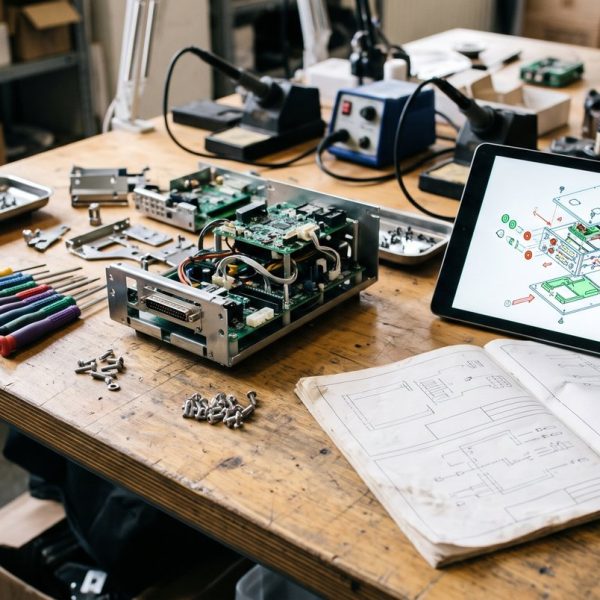
When a user manual is wrong, people do not simply feel confused. They damage equipment, void warranties or, in the worst cases, get hurt. That is why technical manual translation deserves more care than almost any other kind of language work. A marketing slogan can be forgiven for a slightly odd phrase. A torque value or a warning label cannot. Here is how to approach the job so your instructions are as clear in Portuguese or Polish as they are in the original English.
Why technical content is different
Technical writing is built for precision. Sentences are short, terms are fixed and every step has a purpose. Translators must preserve that discipline, which means understanding the equipment, not just the words. A phrase like "release the lever" can be misread if the translator has never seen the machine. The best technical document translation comes from linguists who know the subject, and who ask questions when the source is unclear.
The field is closely tied to the discipline of technical communication, which aims to make complex information usable for a specific reader. You can find a helpful overview in the entry on technical communication. The same goals apply when the manual crosses a language border: the reader must be able to act correctly the first time.
Fix the source before you translate
Most translation problems start in the original document. Ambiguous sentences, inconsistent terms and undocumented abbreviations get multiplied across every target language. Before sending a manual out, read it with fresh eyes. Does it use the same word for the same part throughout? Are the units clear? Are the warnings in a consistent format?
Plain, controlled language pays off quickly. Short sentences, active verbs and one term per concept reduce errors and also lower cost, since there is less text to rework. If you have a style guide in your engineering team, share it with the language provider. For an introduction to why this field matters to manufacturers, the importance of technical translation gives a sound summary of the risks and rewards.
Terminology is the real backbone
A glossary is the most useful asset in any technical translation project. List the names of parts, interface labels, error codes and approved phrases in the source language, with their agreed equivalents in each target language. Make it available to every translator and reviewer. When the glossary is reliable, different people can work on different sections and the finished manual still reads like it was written by one author.
Translation memory tools help here. They store approved sentences and reuse them when the same text appears again, which improves consistency across product lines and updates. If you want to see how this looks in daily practice, read about translating technical manuals in a CAT editor, where tools and human judgment work together.
Layout, images and file formats
Manuals are rarely plain text. They come with diagrams, callouts, tables and sometimes embedded screenshots. Text expands or shrinks in translation: German often runs longer than English, while Chinese is usually shorter. A tidy page can break when the new text arrives. Plan for this by leaving space in the design and by supplying editable files, such as InDesign, FrameMaker or XML, instead of a flattened PDF.
Images that contain text need attention too. If a diagram has labels baked into the picture, ask for a layered version so that the labels can be translated cleanly. Do not forget to check that figure numbers and cross-references still match after translation.
Review, testing and sign-off
Good providers include an independent review by a second subject-matter linguist. For safety-critical documents, it is also wise to have an in-country engineer or product specialist read the translation, since they will catch phrasing that is technically correct but not how people in that industry speak. Some companies go further and have a technician follow the instructions on the real product, which is the best test of all.
Keep a feedback loop open after publication. Support tickets and field reports from local teams show where users stumble. Feeding those back into the glossary and the next revision means the manual improves with each release. Questions from working writers about structure and clarity come up often in communities such as r/technicalwriting on Reddit, a useful place to see what readers actually struggle with.
Choosing technical translation services
Ask potential partners about their experience with your industry, their process for terminology and review, and how they handle updates. Request a short sample on a representative page. Check whether they can work with your file formats and integrate with your content system. And ask how they manage confidentiality, since manuals often contain unreleased product details.
Price matters, but so does the cost of getting it wrong. A recall, a support surge or a regulatory problem will always cost more than a careful translation. Treat technical manual translation as part of product quality, and invest in the people, tools and processes that make every language version as reliable as the original.
Recent Posts
Technical Translation Services...

Spanish Translation Services F...

Edilizia Sostenibile Tra Bulga...

Pratiche Ereditarie Con Docume...

Matricularse En Una Universida...
Contratar Personal Extranjero ...
Share it.
Links
We use cookies
We use cookies to give you the best online experience, remember your preferences, and understand how the site is used. You can accept all cookies, reject optional ones, or choose which categories to allow.
Privacy PolicyCookie preferences
Choose which cookies we can use. Necessary cookies stay on because the site cannot work without them.
For more details, read our Privacy Policy.